Towards a Circular Fashion System
Fast fashion has become one of the defining features of modern consumer culture. Clothes are cheaper, trends move faster, and garments are worn fewer times than ever before. Yet behind the convenience lies a linear system that is environmentally destructive, economically wasteful, and increasingly out of step with the world we need to build.
It doesn’t have to be like this and, as the Ellen MacArthur Foundation (EMF) argues, the question is no longer whether circular fashion is possible, but how quickly we can make it the norm.
Fast fashion follows a “take-make-waste” model: extract resources, make products, use them briefly, then throw them away. The consequences are significant. The fashion industry produces more greenhouse gas emissions each year than all international flights and maritime shipping combined. Between 2000 and 2015, clothing production doubled, while the number of times a garment is worn fell by 36%. If trends continue, apparel production could grow by 63% by 2030, adding more than 500 billion T-shirts’ worth of clothing and pushing annual emissions to 2.7 billion tonnes.

Source: akepa website https://thesustainableagency.com/blog/impact-of-fast-fashion-stats-and-facts/
Impact on the natural world
Fashion also drives biodiversity loss. Cotton farming, dyeing, finishing, and the disposal of synthetic garments all contribute to soil degradation, water pollution, and microplastic contamination. Around two-thirds of textiles are synthetic, shedding microfibres that have been found everywhere from deep-sea sediments to honey and salt.
The Ellen MacArthur Foundation (EMF) proposes a circular economy in which products are used more, made to be made again, and made from safe, recycled, or renewable inputs. This approach reduces waste and pollution, keeps materials in use at their highest value, and regenerates natural systems by relieving pressure on natural resources. It requires durable garments, business models that support reuse and repair, and materials that can be safely recycled or composted. Transparency and traceability across supply chains are essential.

Circular fashion in practice
To show what circular fashion looks like in practice, EMF launched The Jeans Redesign in 2019. Jeans were chosen because they are iconic, widely worn, and resource-intensive. More than 100 organisations have now redesigned jeans to meet EMF’s guidelines. Between 2021 and 2023, they brought 1.5 million redesigned pairs to market. Some brands redesigned 100% of their jeans portfolio; others achieved more than 40%.
These jeans are durable, recyclable, traceable, and made using safer materials. They also sell well: redesigned jeans achieved an average 78% sell-through rate, higher than industry baselines.
The project shows that many circular design solutions are now a design choice rather than a technical challenge. Organic and regenerative fibres are more available, hardware that can be disassembled exists, traceability technologies are emerging, and water-saving processes are becoming common. Some challenges remain, such as re-use of stretch denim and scaling post-consumer recycling in rural communities, but the pathways are clear.
Businesses are investing too. In 2023, participants collectively invested more than US$39 million in redesigning products, upgrading technologies, and building circular design expertise.
Circular design is only part of the story. To keep garments in use, businesses must rethink how clothes are accessed, maintained, and returned. Progress is accelerating; in 2021, only 6% of brands involved in the project offered circular business models. By 2023, 71% had at least one such model in place, including leasing, repair services, resale, and take-back schemes.
These models keep garments in circulation longer, reduce demand for virgin materials, and shift consumer expectations.
While industry and policymakers must lead, individual consumers can play a vital role. Greening Tetbury is already taking action through clothes swaps, charity shop partnerships, and setting up the Meet Make Mend group. These efforts align directly with EMF’s vision.
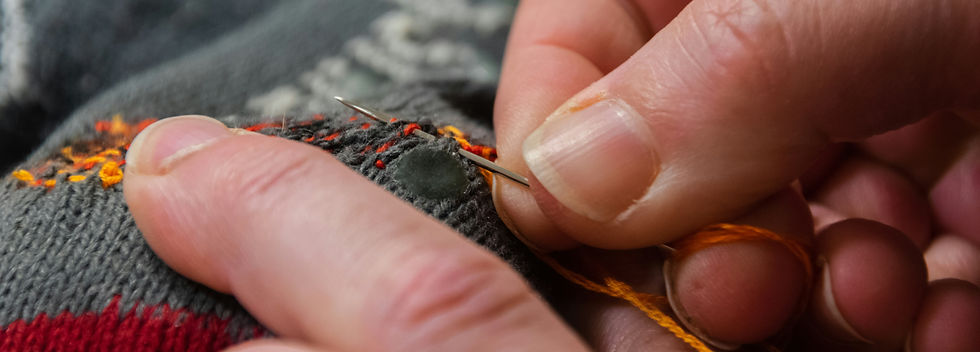
Practical steps you can take include:
Use what you have for longer: repair clothes, attend workshops to learn how, choose durable garments. Come along to our monthly Meet Make Mend workshop, which begins in June.
Keep clothes in circulation: donate to charity shops, use our clothes swap (next one on 14 June) or try sites like Dopple or Untagged, resell through eBay, Marrkt, Thrift+, Vinted and other Apps.
Buy better, buy less: choose well-made garments that will last, and avoid high-shedding synthetics.
Support circular business models: try rental, resale, and take-back schemes to help them become more financially sustainable.
Advocate for change: encourage local retailers and support policies promoting transparency and recycling infrastructure.
A circular economy for fashion is not only possible, it is already emerging. The challenge now is to scale it, accelerate it, and make it the default way we design, make, use, and value clothing. At Greening Tetbury we can all be part of that story by rethinking our relationship with fashion, supporting circular practices, and championing local initiatives.


Comments